A Guide to Carpet Tiles: Pros, Cons, Uses, Maintenance and More
Carpet tiles have become an increasingly popular alternative to wall-to-wall broadloom carpets due to their modular nature, which makes them particularly well suited to high-traffic spaces such as offices and classrooms.
However, to know if carpet tiles are the best fit for your project, it's important to have a deeper understanding of the pros and cons of carpet tiles before making your purchase.
What is carpet tile?
Carpet tiles, or 'carpet squares' as they’re sometimes known, are simply individual tiles of carpeting that can be slotted together. Usually, carpet tiles are structured with a layer of pile fibres, tufted into a primary backing which is then reinforced by a second layer.
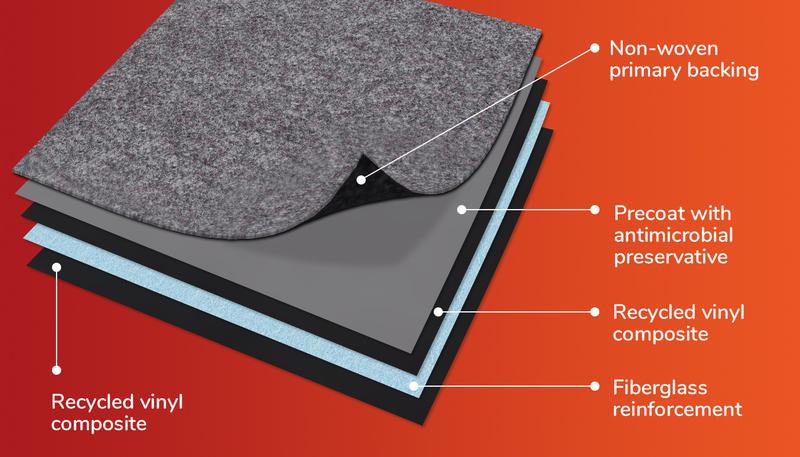
Developed in the mid-twentieth century, carpet tiles were designed to provide an accessible, self-serve flooring option that homeowners could easily install themselves.
In addition to the convenience of carpet tiles, there are limitless combinations of fun designs available, making them perfect for simply adding vibrancy to a space.
While domestic trends have continued to favour broadloom carpet, with laminate, vinyl and hardwood flooring also growing in popularity, as an option in the home, carpet tiles have continued to grow in popularity in a different, more commercial market.
Offices, school classrooms and many industrial spaces usually opt for carpet tiles due to their durability, easy maintenance and efficiency.
Which carpet tiles are best?
Carpet tiles use various pile yarns in their makeup, and the best one for you depends on where they're going. For most spaces, nylon is the best all-rounder - it has excellent wear performance and is recyclable too. You will also find carpet tiles made from wool, which gives a more premium natural feel, polypropylene, a good budget-friendly option with strong stain resistance, and recycled polyester (PET), which is worth considering if sustainability is a priority.
What is the standard size of carpet tiles?
Carpet tile sizes vary, but, the most common size of carpet tile is 50 x 50cm, however, they are available in other formats and dimensions too including larger carpet square sizes of 60x60cm and 96x96cm.
It is not just squares that the tiles can be sold in either – there are more niche, odd shapes to fit certain rooms or to create a certain effect. They will, however, be a little more expensive to purchase and some require a bit more skill and planning to install, though the professional installer should have no difficulty managing this.
What carpet tile styles are available?
When carpet tiles were a roaring success within the home, particularly in the sixties and seventies, the designs and colours were a big factor in their popularity. Recent development in technologies allows for carpet tile colour and designs to be more exuberant than ever.
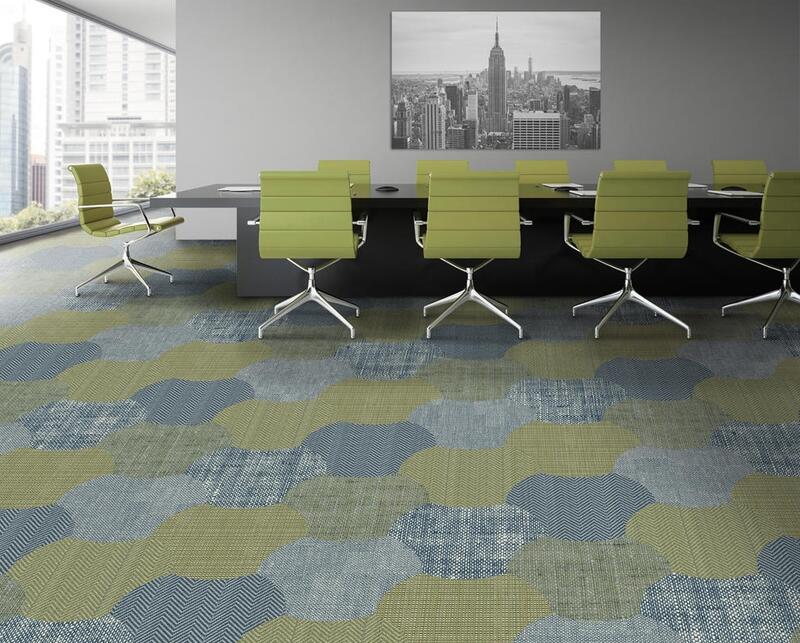
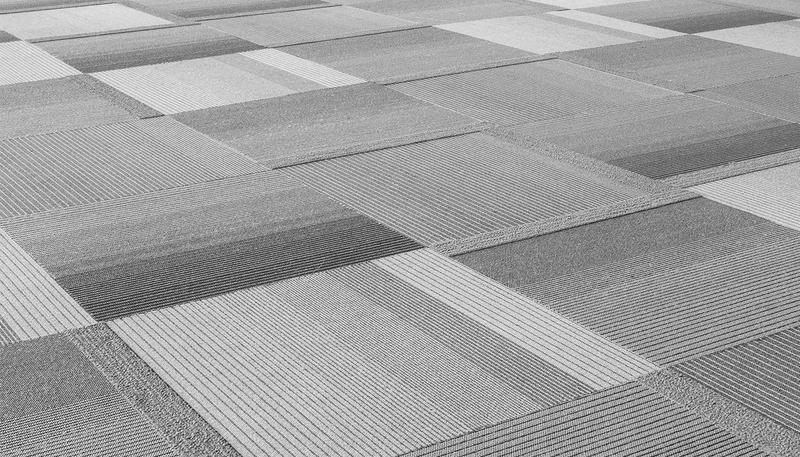
While a staple of the carpet tile is a boxy look, where the pattern flows together easily, it is not uncommon to see alternative, geometric shapes flow across a room. This is becoming an increasingly popular option for many office spaces.
Carpet tiles use various pile yarns in their makeup and there are a range of materials used, each with their own benefit. The most popular is nylon, which has excellent wear performance and is recyclable. You will also find carpet tiles made from materials such as wool, polypropylene and recycled polyester (PET.)
What are the benefits of carpet tiles?
Easy to install
Arguably one of the most attractive benefits of carpet tiles is simply how convenient they are. As they are modular and able to be purchased in small units, they are easy to store, transport and handle.
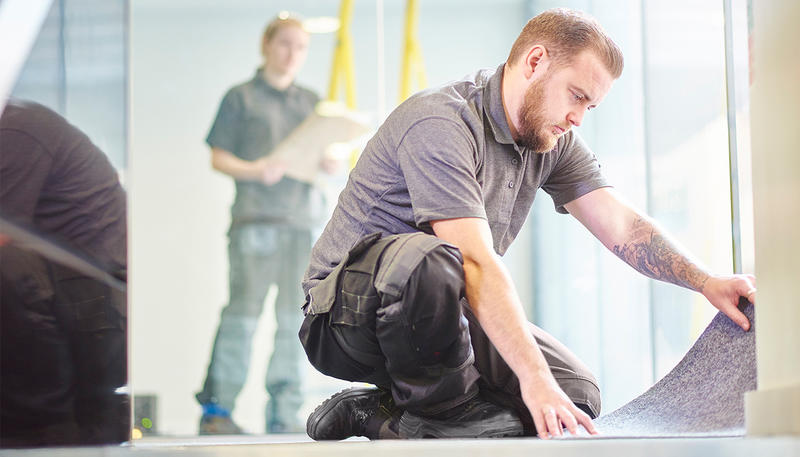
When it comes to fitting, a professional installer will have no issues with carpet tiles as they are so simple to put together.
They simply require a sharp utility knife and a straight edge to cut. To cut a carpet tile, measure the gap and mark the cutting line on the back of the tile - a professional will cut from the back to protect the front pile and give it a neater edge.
Unlike traditional carpets, most carpet tiles don’t require underlay and you don’t need to put anything under them, apart from a clean, dry, smooth subfloor. We’d advise to use a recommended tackifier adhesive, adhesive tabs, or backing system.
However, some businesses will add an underlay specifically designed for carpet tiles, in order to provide extra comfort and warmth or to reduce sound.
Carpet installation can go ahead with minimal disruption to the work or living space, and in a relatively short time frame.
Versatility
Carpet tiles are good because they’re versatile, in the sense that they’re easy to handle in small spaces and quick to install over large areas. With the many designs, shapes and materials they come in, there is something to suit every area – from boardroom to bedroom.
In modern office environments where floors conceal intricate cabling or ducting arrangements, which must be accessible at all times, carpet tiles are the answer. Since they’re easy to cut to size, these areas can be accessed without the flooring being compromised.
Cost effective
Carpet tiles are cost-effective as they reduce waste, transportation costs, and require little storage space when compared to traditional carpeting. The key saver is the installation cost, as this will, generally, take a lot less time for a professional installer than it would for wall-to-wall carpet.
For businesses looking to install carpet, the relative speed of using carpet tiles will see a reduction in disruption and downtime, meaning lower associated costs.
In a commercial setting, many people wonder if it's cheaper to lay carpet or tiles, whereas in most cases carpet tiles can work out more cost-effective to fit. As they are lightweight, easy to handle and require no underlay, installation is often quicker, which keeps labour costs down.
Fitting carpet tiles typically costs from around £5 per square metre, compared to £10 per square metre or more for fitted carpet.
Durability
Depending on the footfall traffic level of your business, some carpets won’t need replacing for up to 15 years. For businesses that experience medium levels of footfall, it’s recommended to replace your carpet every 5-10 years, while those who experience the heaviest levels of footfall might need to replace their carpets sooner, unless they’re regularly maintained by a cleaning team.
If you’re looking for higher levels of durability, carpet tiles can last for a longer period of time and can usually withstand up to 20 years of footfall, but that’s if they’re made from premium materials like nylon and experience low to medium levels of footfall.
Renowned for their lifespan and ability to withstand heavy traffic in busy spaces, carpet tiles are a high performing flooring option. The majority of carpet tiles are low pile, looped and very tight.
However, the specification of carpet tiles can be modified to suit different needs. By changing the yarn fibre, pile weight and backing option, you can vary the look, feel & performance of your carpet tile.
What happens if carpet tiles get wet?
Unfortunately, Brits are more than used to the rain, which means many customer-facing businesses have to deal with lots of wet-shoe footfall on their commercial carpets. When carpet tiles get wet, they can face the same issues as normal carpets, such as fading or fraying, although this is usually only a concern with high levels of water. If it does happen, though, it’s much easier and more cost-effective to fix, as you can simply replace the damaged tile rather than the whole carpet.
Low maintenance
Easy to clean and easy to replace, looking after your carpet tiles is easy. Maintaining the day-to-day appearance of the carpets is simple as they respond well to regular vacuum cleaning but generally, as they are low pile, they tend to collect less dirt. Learn more about how to keep your carpets clean and prevent damage.
How to clean carpet tiles
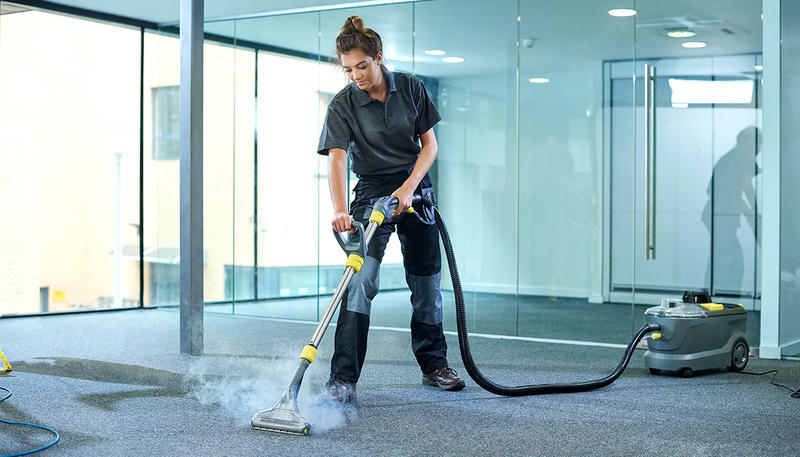
Carpet tiles are low maintenance and only require vacuuming once or twice a week for low and medium levels of footfall, they often require a deeper clean every year. Heavier traffic may require daily vacuuming and may benefit from being deep cleaned every season or every 6 months. For more information about how to clean your carpet tiles to prevent damage, read through our how to keep your carpets clean guide.
If there is a problem area in a certain space, the benefit of carpet tiles is that they can be individually replaced. The tiles can be removed and replaced, as they were installed in the beginning.
Reusable and sustainable
In the first instance of fitting carpet tiles, there is comparably very little waste since you order the tiles to fit the space – unlike broadloom, where this is not an option due to the wall-to-wall installation. This is a benefit in the long run too; should you need certain areas replaced, as there is no need to replace the entire flooring.
Additionally, carpet tiles are reusable in many cases. While they may no longer meet your requirements, in terms of colour, design or quality of appearance, they will likely find a use somewhere else. It is not uncommon for carpet tiles to become refurbished and used in social or entry-level housing.
Disadvantages of carpet tiles
Most disadvantages of carpet tiles tend to be a product of their modular format rather than the tiles themselves, which are a great alternative to traditional broadloom carpet.
Non-uniform appearance
Even with inch-perfect placement, carpet tiles may not repeat the uniform look that broadloom carpets have – this is just the nature of how carpet tiles are designed. Some versions are better than others for mimicking a 'broadloom' look.
Fraying or loose fibre
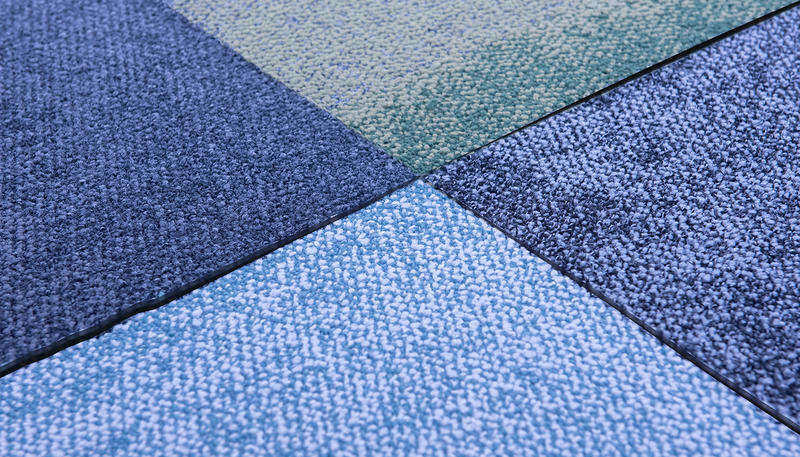
For obvious reasons, there are more joints/seams in a carpet tile installation than there would be in an equivalent broadloom installation. If we ignore the aesthetic of this, there is no particular problem with this from a practical standpoint. Sometimes you can experience some fraying or loose fibre to tile edges, which has occurred during production, but this is a relatively easy matter to remedy during, or post, installation.
Overlooked installation steps
Whilst carpet tiles are, relatively speaking, straightforward to install it is vital that the manufacturer's recommendations and the relevant British Standards which govern installation practices and conditions are followed to the letter.
Acclimatisation, in particular, is one requirement which is sometimes overlooked, often for reasons of expedience. Failure to properly acclimatise tiles can lead to them 'moving' in the post installation period. This can lead to the overall look being unsightly as joints between tiles become more pronounced or tiles 'tent' (centre higher than corners) or 'dish' (corners higher than centre). The likelihood of this sort of problem occurring increases at times of year when outside and inside ambient temperatures vary most.
Do carpet tiles need to be glued down?
For the same reasons, it's also important to be aware of the instructions for bonding carpet tiles to the sub floor. Some tiles are self-adhesive, or use particular and specific bonding systems, but for the most part a tacky adhesive is used which helps to ensure stability of the tiles in the lateral plain, but still allows for tiles to be lifted and removed. Recommendations on adhesive type and coverage may vary from product to product so specific details should be sought and followed.
Perception of being less luxurious
There has often been a perception that carpet tiles have a less comfortable, luxurious, feel underfoot than, say, a broadloom carpet installed over an underlay. Whilst this may have once been true to a large extent, many carpet tiles are now available with integral cushion backings which provide them with increased comfort, insulation and anti fatigue benefits.
Should you buy carpet tiles?
Ultimately, the decision is with you and whether you think carpet tiles will work in your space. Hopefully, after reading through our honest assessment, you will know but if not, let’s take a look at the key reasons for buying carpet tiles:
- If time is of the essence and you want your flooring to be installed with minimal disruption or downtime
- If ease of handling, distribution, storage and transportation are of benefit to you
- If relative ease of installation is important, along with the potential cost savings that may result
- If you want a flooring option that is easy to maintain and replace
- If you want to be able to add some colour and personality to a room, but don’t have the budget for a custom design, carpet tiles are an excellent way to bring this to your space.
If you’re convinced that commercial carpet tiles would make a great carpeting solution for your space, then our expert sales team would be delighted to help. If you need any further details or a competitive quote on any of our commercial carpet tiles, with free samples on our full range of styles and colours available to order online, then get in touch today!